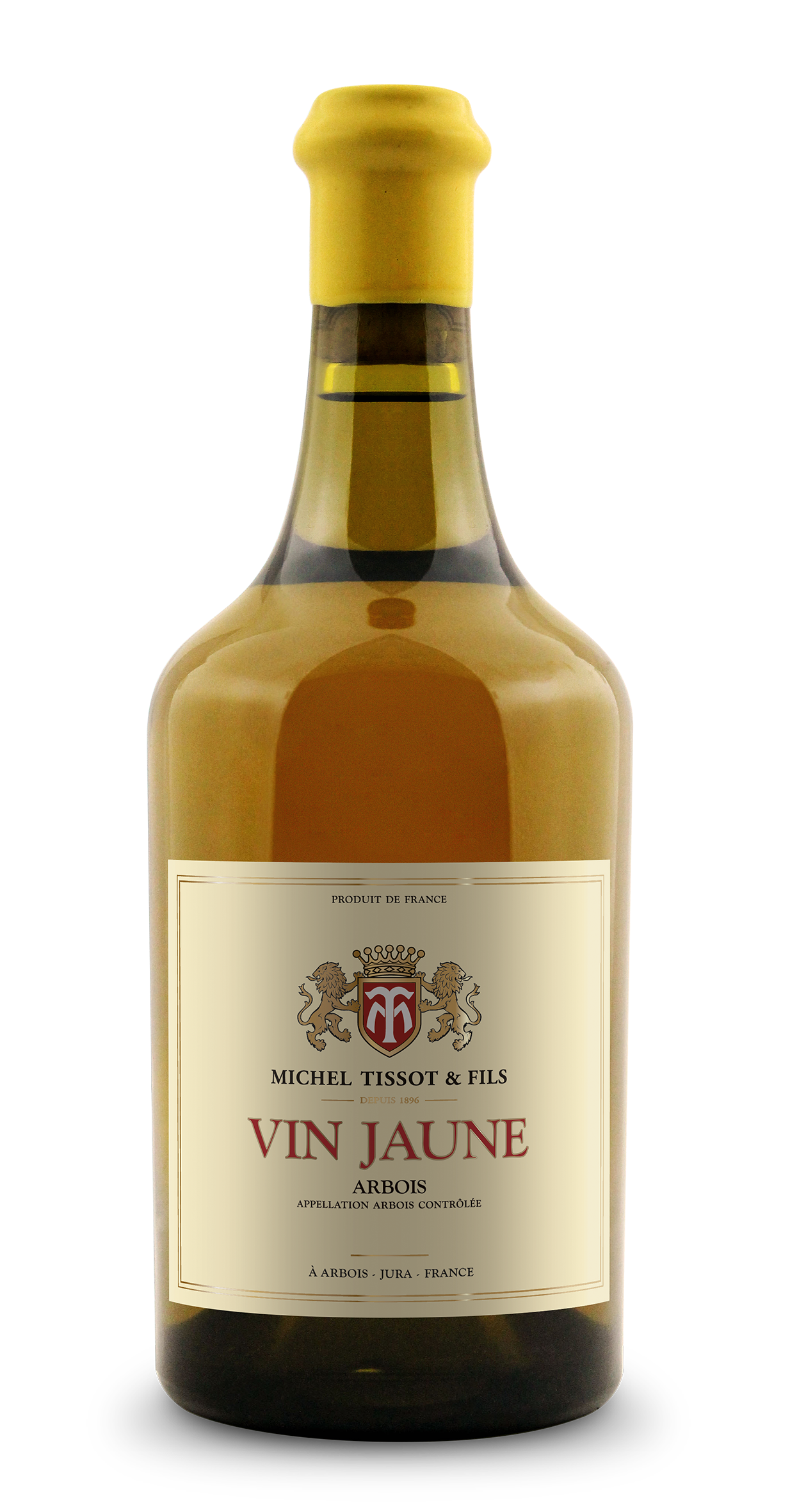
VIN JAUNE 2019
ARBOIS
Grape Varieties
Savagnin, the only vine variety authorized for this wine. Savagnin is a typical Jura variety, flourishing on its grey marl and ripening slowly. This demanding, patient vine variety is the best type for Vin Jaune.
Tasting notes
The wine’s long maturation in oak barrels helps achieve its wonderful deep, limpid golden colour. Its very intense nose contains a range of aromas: cooked apple, curry, saffron and walnut. Its mouthfeel has a lively, powerful and well-formed attack. The mouthfeel confirms the aromas in the nose, providing a remarkable range of flavours: fresh walnut, curry, green apple, dried fruit and saffron. A grandiose finish.
Food and wine paring
This dry, powerful wine ages wonderfully well. It can also be enjoyed at any moment, from the appetizers to the dessert: Comté cheese, gougères (baked savoury choux pastry made of choux dough mixed with cheese), mushrooms on toast, snails, crayfish, poultry, white meat and fish. For fine dining, it is also an excellent choice to serve with lobster and white truffles. It is also wonderful for making cream sauces.
Serving suggestions
Serve at a room temperature of 14–16°C. (57-59°F.). Bottles can be decanted into a carafe after they have been uncorked for a few hours.
Ageing potential
This remarkable wine is ready to drink as soon as it is bottled, but can also be kept for years.
Appellation
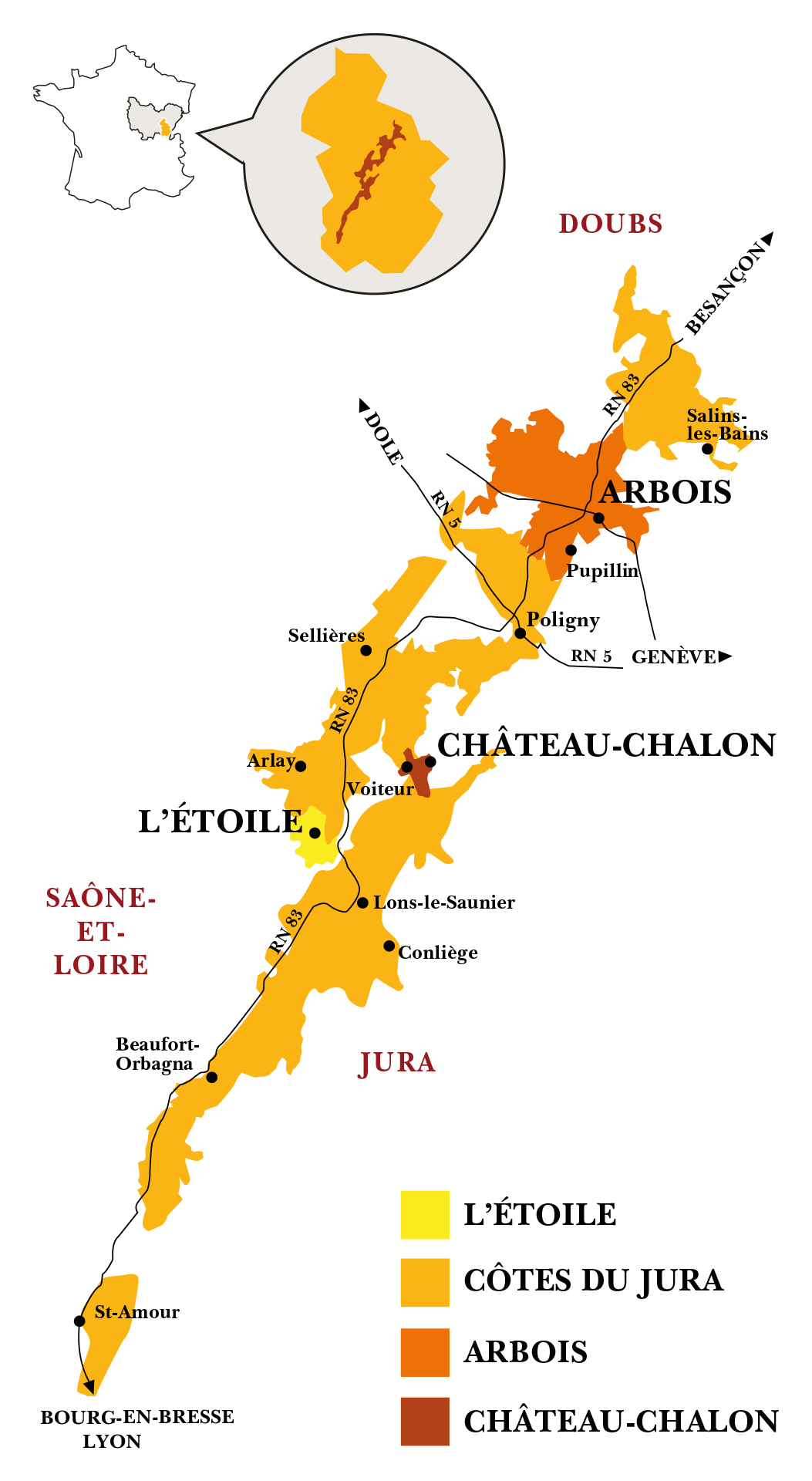
The Jura wine region is small in size but large in its remarkable diversity. It covers 80 kilometers between Burgundy and Switzerland, in the eastern France.
The Arbois AOC is the oldest and largest of the Jura's four geographic AOCs. In particular, it was France's first AOC (created in 1937). Its name originates in the Celtic words "ar" and "bois" that would mean "fertile land".
Winemaking
This late-ripening grape variety, intended to be overripe or even affected by noble rot, is harvested at the end of the season, generally from the second half of October over about one week. While mainly machine-harvested, part of the crop is picked by hand to preserve the young vines.
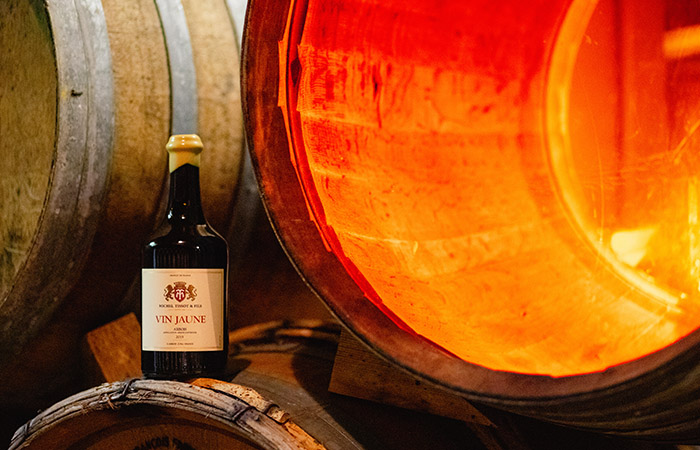
The Savagnin is directly pressed and vinified as a dry white wine, followed by a short ageing on fine lees until spring. It is then transferred into oak barrels with a 5 L headspace to encourage the development of the flor and a controlled oxidation.
The wine is aged for a minimum of 6 years and 3 months without intervention. This process enables the formation of a layer of yeast, responsible for the distinctive “yellow wine” character, with complex aromas of walnut, hazelnut, almond and spices.
After ageing, the wine is bottled in a 62 cl clavelin, corresponding to the remaining volume after maturation.
Vintage : 2019
Despite a year marked by weather events, notably an episode of frost in May which hit yields hard, the 2019 promises to be very qualitative.
During the summer, the Jura benefited from regular rain, thanks to passing storms which mitigated the effects of the heatwave.
Lower volumes and sunny yet cool weather during ripening and harvesting gave an aromatic and concentrated vintage.